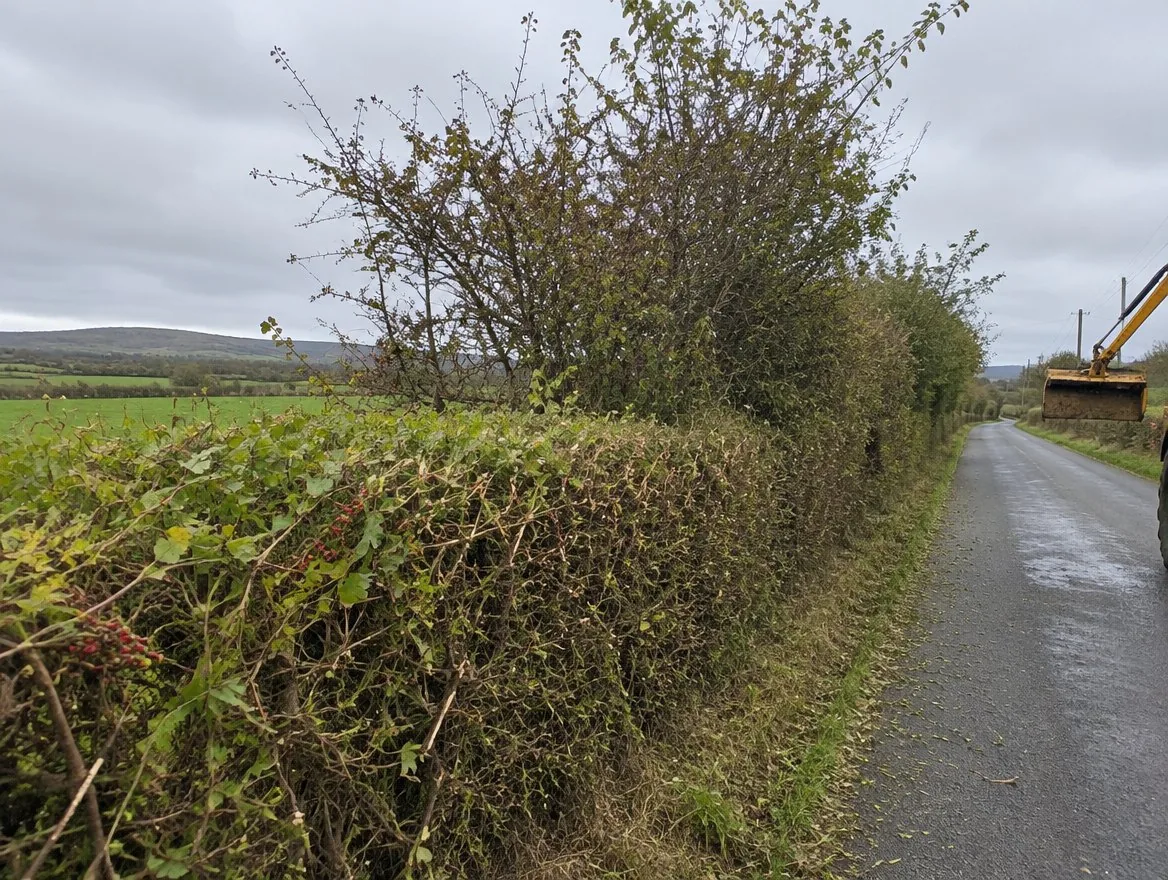
Every spring across Sligo, Mayo, Roscommon and Leitrim, homeowners ring us with the exact same question: am I allowed to get my hedge cut right now, or do I have to wait until September? Because Ireland has strict seasonal rules protecting nesting birds, knowing the difference between roadside or agricultural hedgerows and light domestic garden trimming saves you stress, protects local wildlife and helps you plan heavy reductions at the right time of year.
What the Irish Wildlife Act Says About 1 March to 31 August
Under Section 40 of the Wildlife Acts in Ireland, the cutting, grubbing, burning or destruction of vegetation growing on uncultivated land or in hedges and ditches is prohibited between 1 March and 31 August each year. That six month closed window exists for one very clear reason: native birds such as robins, wrens, blackbirds, thrushes, finches and dunnocks build nests and rear young deep inside Irish hedgerows throughout spring and summer.
From 1 September through to the end of February, the open cutting season runs across rural Ireland. That six month autumn and winter window is the proper time for heavy reductions, reshaping tall field boundaries, clearing overgrown roadside ditches and tackling big leylandii or whitethorn rows.
What About Domestic Garden Hedges?
Ordinary garden maintenance within the immediate curtilage of a private house is treated differently from agricultural or roadside hedgerows. Light trimming of neat domestic garden hedges such as privet, box, griselinia, escallonia or kept laurel is generally permitted during the summer months to keep paths, drives and lawns tidy.
Even in a private back garden, however, disturbing or destroying an active bird nest is always illegal at any time of year. Before lifting a hedge trimmer in spring or summer, we always inspect the foliage carefully for nests, regular bird flight traffic or chicks. If an active nest is spotted inside a garden hedge, we leave that section untouched until the young birds have safely fledged.
Road Safety Exceptions Along Lanes and Entrances
The main narrow exception during the closed season involves genuine road safety hazards. Where overhanging branches or tall roadside growth block sightlines at an entrance, hide traffic signs, force walkers into the road or strike passing vehicles, limited targeted trimming strictly to remove the hazard may be required under roads legislation. Even then, only the obstructing growth should be pared back, never a wholesale flailing or drastic height reduction while birds are nesting.
If you have a blind driveway exit onto a busy Sligo or Connacht road, trimming it properly back in January or February prevents it turning into a June headache in the first place.
Best Timing for Leylandii, Laurel and Flowering Garden Hedges
Beyond the law, plant health and appearance depend hugely on cutting at the right point in the growing season.
- Leylandii and cypress shelter belts: schedule heavy height reductions and major reshaping between September and February. Light face trims to keep them crisp work best in late spring or late summer, always checking for nests first and never cutting back into bare old brown wood unless removing the hedge.
- Laurel and Portuguese laurel: responds brilliantly to hard reduction in autumn or late winter, shooting back thick glossy green growth once spring warmth returns.
- Hawthorn, whitethorn and mixed native hedges: strictly keep major cutting to the September to February open season, ideally later in winter so birds get the benefit of autumn berries.
- Flowering hedges such as fuchsia or escallonia: trim lightly straight after flowering finishes or reshape cleanly in late winter so next year's blooms come back strong.
- Griselinia and privet: regular light trims keep coastal Sligo and Mayo hedges tight and wind resistant without leaving bare gaps.
Planning Ahead Saves Money and Leaves a Better Finish
Leaving an overgrown boundary hedge until it hits twelve or fifteen feet tall turns a quick annual trim into a major height reduction with ladder work, chipping and heavy green waste removal. Booking your main cut between September and February lets us shape the hedge cleanly without rushing around nesting season, and keeping a simple annual trim thereafter keeps light flowing into your garden.
A neat trick for strong, healthy garden hedges in exposed Connacht winds is trimming them slightly narrower at the top than at the base, known as a gentle batter. That slight taper lets sunlight reach the lower leaves evenly so the bottom stays lush and green instead of turning bare and woody, while also shedding heavy wet snow and winter gales far more easily.
Remember too that a thick boundary hedge generates a surprising amount of cuttings once reduced by three or four feet. We bring commercial chipping and haulage equipment so every clipping is swept off footpaths, lawns and neighbours' driveways and cleared completely from site.
If your hedge sits along a shared boundary between neighbours, a quick chat before booking makes everything straightforward, especially if we need side access to tidy both faces neatly and clear stray trimmings from the other side of the wall or fence.
Keeping both sides trimmed cleanly also prevents branches leaning over footpaths or neighbour lawns during heavy summer growth.
Unsure whether your hedge can be trimmed now or should wait until September? Send us a photo on WhatsApp or call 085 114 2162. We will give you straight, honest advice and a free fixed quote with every branch and clipping cleared away afterwards.
Related Local Services
Hedge Cutting and Hedge Reduction in Sligo
Sharp trimming, tall leylandii reductions and full green waste clearance.
Tree Pruning and Crown Reduction in Sligo
Tidy overhanging boundary trees alongside your hedge maintenance.
Tree Surgeon Sligo
Local hedge cutting and tree surgery across every town in County Sligo.
Need Honest Local Advice or a Free Quote?
Ring Westland directly on 085 114 2162, send a quick photo on WhatsApp or use the free quote form below. Fully insured across Sligo, Mayo, Roscommon and Leitrim.