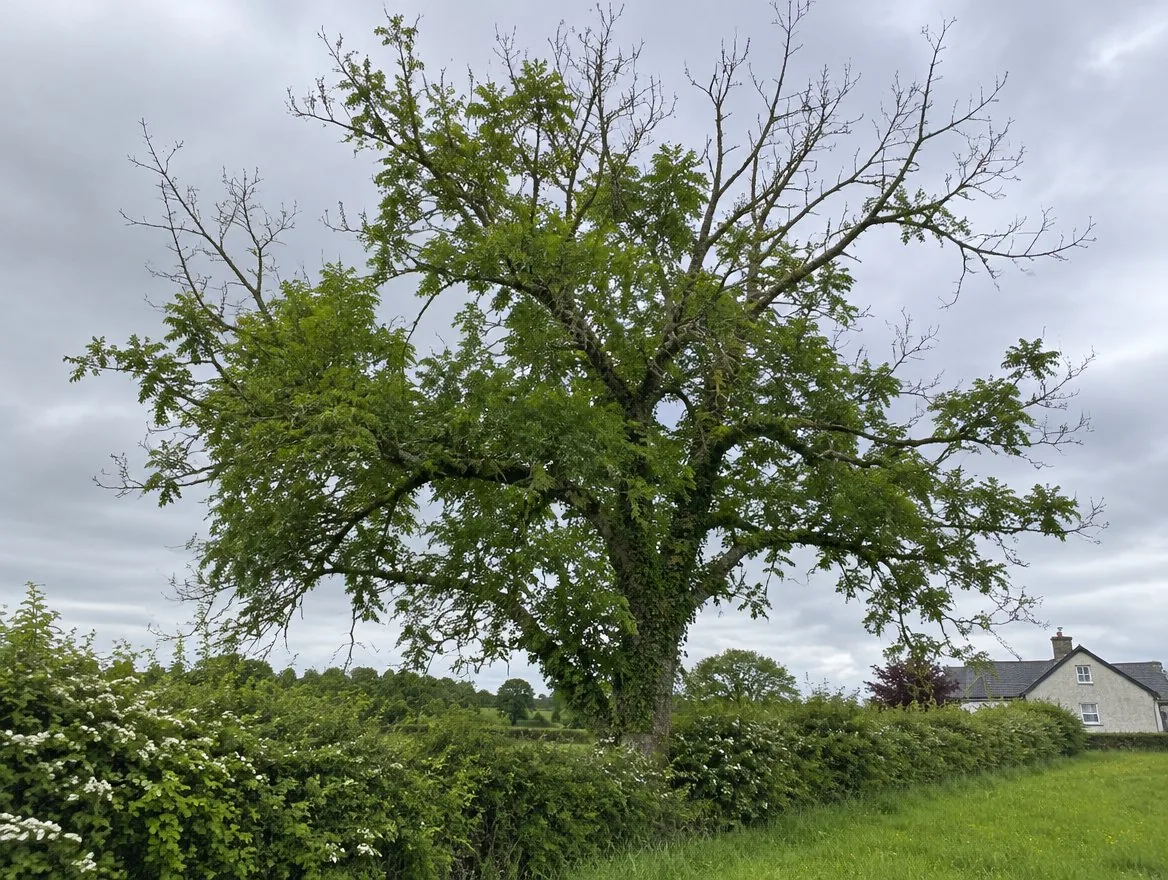
Drive along almost any country road in Roscommon, Sligo, Mayo or Leitrim during July and you will notice mature ash trees with sparse, thin crowns and bare dead twigs poking out through the top. Ash dieback, caused by the fungus Hymenoscyphus fraxineus, has taken a serious hold right across the west of Ireland. While an infected tree standing deep in a quiet field can sometimes be left for wildlife, an infected ash standing within falling distance of your house, driveway, shed or public road is a different matter entirely.
How to Spot Ash Dieback on Your Property
The easiest time to check ash trees is between late June and August when healthy trees should carry a thick, uniform green canopy. Early infection often shows first at the tips of upper branches before working steadily back towards the main limbs and trunk base.
- Thinning foliage where far more sky shows through the crown than neighbouring trees.
- Dead, bare shoots and twigs sticking out around the outer edges of the canopy.
- Leaves wilting, blackening or dropping early in mid summer while nearby trees stay green.
- Diamond shaped dark sunken patches or cracks along smooth bark on younger stems and branches.
- Dense clusters of feathery new shoots sprouting lower down the trunk as the tree tries to survive.
- Dark discoloured lesions or soft fungal rot right at the base of the trunk where roots meet soil.
Why Diseased Ash Becomes Dangerous Faster Than Most Trees
Healthy green ash is famously tough, springy timber. Once ash dieback advances, secondary decay fungi such as honey fungus quickly move into the weakened root collar and heartwood. Within a couple of seasons, the wood dries out and turns brittle like dry chalk.
That makes late stage ash trees hazardous in two ways. First, heavy upper limbs can snap cleanly in moderate gusts or even calm summer weather without creaking or bending beforehand. Second, once the base rots out, an entire tree can topple unexpectedly onto a lane, barn roof, parked car or overhead cable. Leaving an infected tree until it is completely dead also makes removal slower and riskier because the trunk can no longer be safely climbed.
What Homeowners and Landowners Should Do First
Start by walking your boundaries and checking what sits within the full height of any affected ash tree. If a tree leans towards your house, farmyard, children's play area, neighbour's roof or a public road, do not wait for a winter storm to decide when it comes down. Under Irish law, landowners hold responsibility for keeping roadside trees safe.
Do not attempt to cut down a dead or heavily decayed ash tree yourself with a small chainsaw. Brittle ash limbs regularly shatter on impact and trunks can split vertically up the stem as soon as a felling cut goes in. Having a fully insured tree surgeon assess the tree early lets us dismantle it while the wood still holds safe rigging strength.
Checking Permissions and Felling Rules
Before removing ash trees outside a domestic garden, it is important to check whether a felling licence is required or whether a local County Council Tree Preservation Order applies. For urgent roadside hazards and specific domestic garden removals, different exemptions apply, and we always talk through what needs checking before booking the job.
Where trees sit along hedgerows, planning removals outside the March to August bird nesting season keeps wildlife protected wherever the tree is not an immediate safety hazard.
Safe Sectional Dismantling, Chipping and Replanting
Across Roscommon farms, Sligo avenues, Mayo lanes and Leitrim gardens, we remove failing ash trees cleanly using controlled rigging and safe felling techniques. All brushwood is chipped on site or removed, and solid sound lengths of ash timber can be cut cleanly into logs if you burn firewood at home. Remember not to move infected green branches far afield unnecessarily; chipping and clean local disposal stop debris cluttering your yard.
Homeowners often ask whether pruning out dead twigs can save an ash tree already showing widespread dieback. Unfortunately, once more than half the canopy has thinned or fungal lesions appear around the base of the trunk, pruning cannot stop the infection moving deeper into the roots. Removing the compromised stem early while it can still be handled safely avoids emergency winter call outs when storm winds strike.
If several ash trees line a driveway or farm lane, we can stage the work sensibly, starting with the trees closest to roofs, overhead cables, public roads and regular parking spots so your budget goes straight to the highest risks first.
Once a diseased ash comes down, people are often surprised by how much extra winter sunlight reaches their lawn, solar panels or farmhouse roof. Taking out the stump below grass level removes trip hazards for mowers and prevents awkward suckers sprouting back up the next spring.
Even if you are unsure whether a tree on your boundary is suffering from early ash dieback or simple wind scorch, sending us a couple of clear summer photos of the canopy and trunk base lets us give you an honest steer straight away.
Once the stump is ground out, replanting with hardy native alternatives such as oak, birch, hawthorn, rowan, alder or hazel restores shelter and wildlife value for decades to come. If you have worrying ash trees near your home or lane, contact us for a free site check and fixed quote.
Related Local Services
Tree Removal and Felling in Sligo
Controlled dismantling of diseased ash and unsafe mature trees.
Emergency Tree Surgeon and Storm Damage
Urgent response when brittle ash limbs split or fall across access.
Tree Surgeon Roscommon
Local tree care and ash dieback removal across Boyle, Castlerea and County Roscommon.
Need Honest Local Advice or a Free Quote?
Ring Westland directly on 085 114 2162, send a quick photo on WhatsApp or use the free quote form below. Fully insured across Sligo, Mayo, Roscommon and Leitrim.